Table of Contents
Personalize your Shopify products
Install for freeReturns are the silent profit killer for any merchant selling custom items, but with the right strategy, you can dramatically cut return rates while keeping customers happy.
Why Returns on Personalized Products Are a Unique Challenge
If you sell personalized products - custom t-shirts, engraved jewelry, monogrammed gifts, or print-on-demand merchandise - you already know the uncomfortable truth: returns on personalized products can wipe out your margins fast.
Unlike standard retail, where a returned item can be restocked and resold, a custom product with someone's name, photo, or message on it is often unsellable once it comes back. That makes every return doubly painful: you lose the sale and you're stuck with inventory you can't move.
The good news? Most returns on custom products are preventable. And in this guide, we'll show you exactly how to reduce returns on print-on-demand and personalized merchandise: from setting up a bulletproof custom product return policy to designing the customer experience so mistakes never happen in the first place.
The Most Common Reasons Customers Return Personalized Products
Before you can fix the problem, you need to understand it. Here are the top reasons merchants see returns on personalized items:
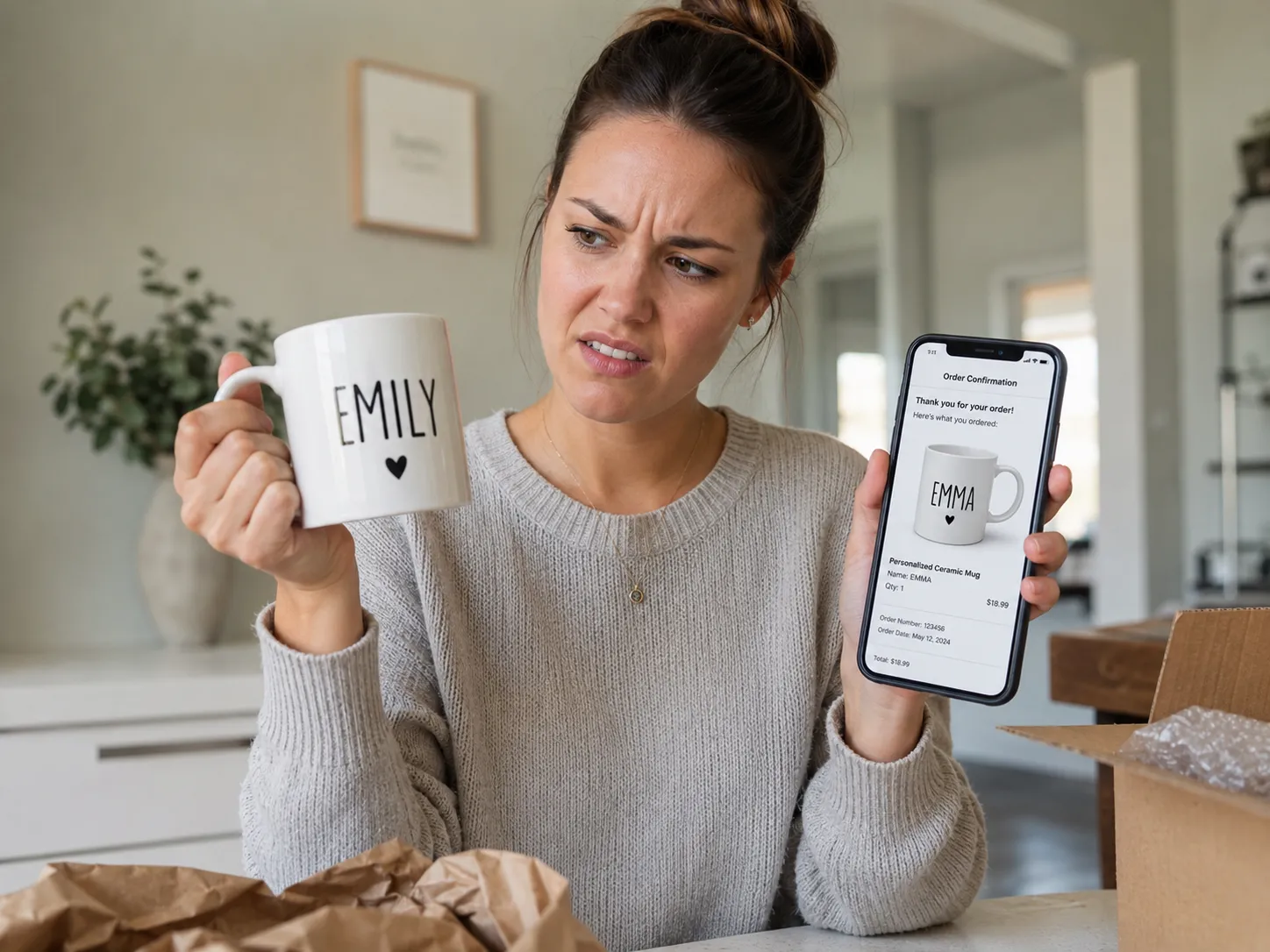
1. Buyer error at checkout: The customer typed the wrong name, selected the wrong size, or uploaded a low-resolution photo. They realize the mistake after the product arrives, and want a replacement or refund.
2. Unclear product previews: Without an accurate preview of the final product, customers often have different expectations from what they receive. Color variations, font choices, or placement issues can all lead to disappointment.
3. Quality issues with print or personalization: A blurry print, cracked vinyl, or faded engraving creates a legitimate reason to return, and damages your brand reputation.
4. Size and fit problems: For apparel and accessories, sizing errors are a top driver of returns. When a product can't be resold, these returns hit especially hard.
5. Shipping damage: Products arrive damaged in transit. While not your fault, it becomes your problem if your packaging isn't protecting the goods.
📌 Understanding which category drives your returns is step one: Add a short reason field to your return or exchange request form, the data will be invaluable.
Build a Custom Product Return Policy That Protects You and Your Customers
A well-crafted custom product return policy does two things simultaneously: it protects your business from preventable losses, and it builds customer trust by being honest and fair.
What to include in your custom product return policy:
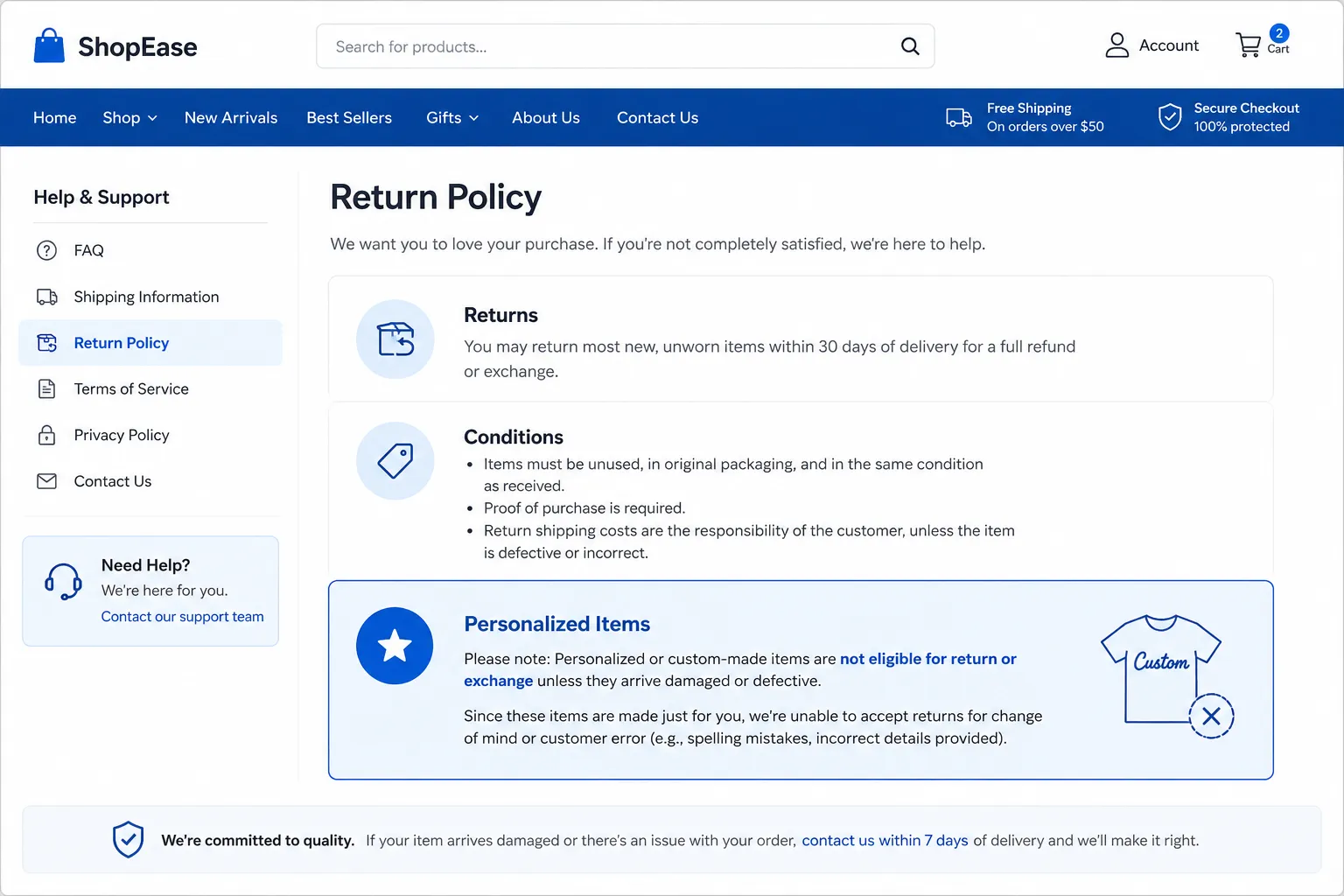
Be explicit about what is and isn't returnable. Clearly state that personalized or custom-made items are non-returnable unless there is a defect or error on your part. Most customers understand this, they just need it stated clearly before they buy.
Define "defect" and "merchant error" clearly. List specific examples: wrong text printed, wrong color fulfilled, product arrived damaged, incorrect item shipped. This removes ambiguity and makes dispute resolution faster.
Create a hassle-free path for legitimate issues. If you made the mistake, own it immediately. Offer a free reprint or full refund within a defined window (e.g., 14–30 days of delivery). Customers who experience quick, easy resolutions become repeat buyers and brand advocates.
Address buyer errors with empathy, but with limits. Consider offering a one-time "we understand mistakes happen" reprint at cost for buyer errors. This isn't required, but it differentiates you from competitors and builds loyalty. Just make it clear this is a goodwill gesture, not a standard policy.
Display your policy at every key touchpoint:
- Product pages (near the Add to Cart button)
- Cart and checkout pages
- Order confirmation emails
- Your FAQ page
📌 Pro tip: Don't bury your return policy in fine print. Merchants who display a clear, honest policy upfront actually see higher conversion rates, customers feel safer buying when they know the rules.
6 Proven Strategies to Reduce Returns on Print-on-Demand Products
1. Use a Real-Time Product Configurator with Live Preview
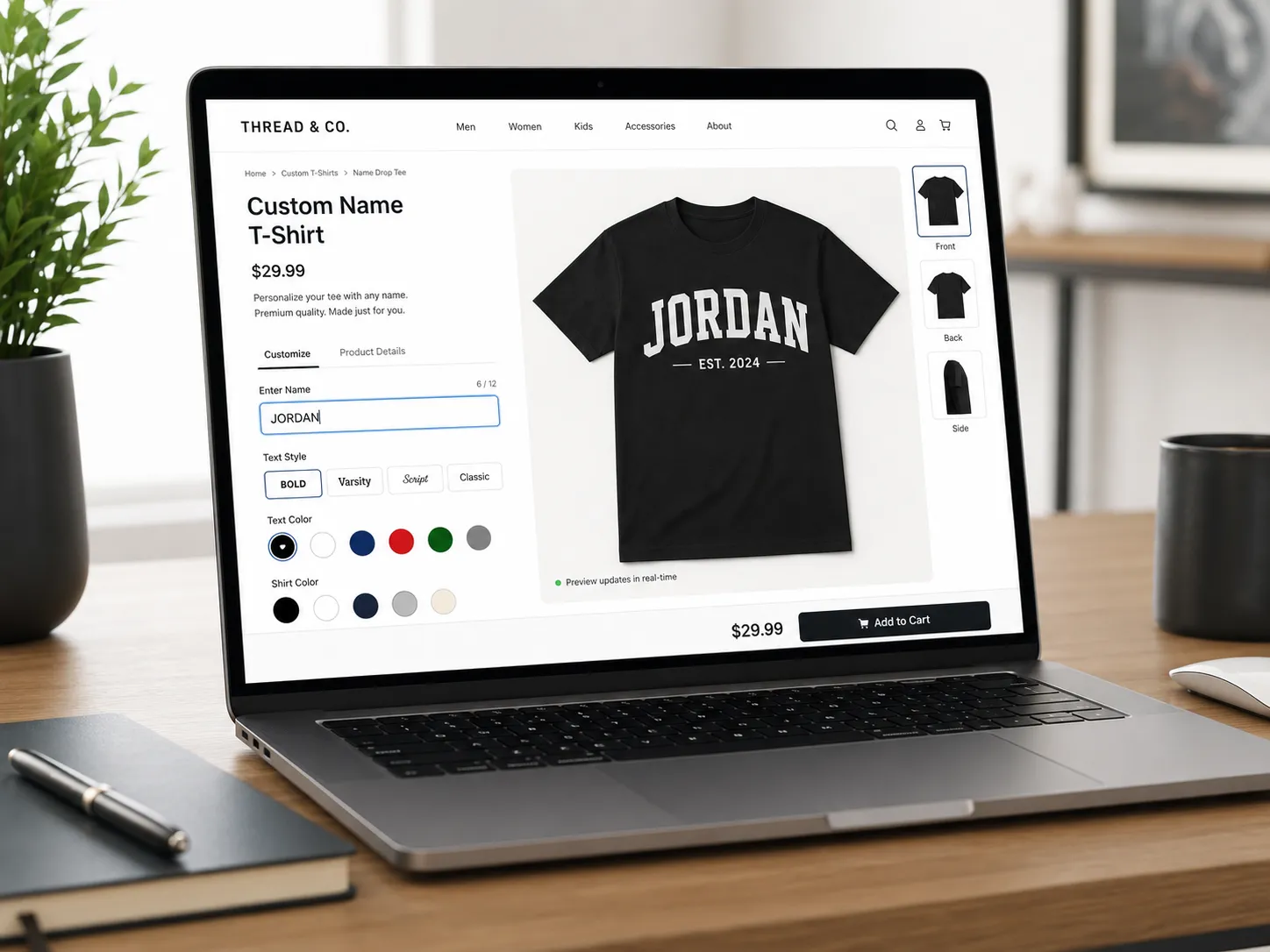
The single most effective tool to reduce returns on personalized products is a live product preview. When customers can see exactly how their name, photo, or design will look on the product - before they buy - error rates drop dramatically.
A good configurator should:
- Update in real time as the customer types or uploads
- Show accurate colors, fonts, and placement
- Flag potential issues (e.g., "Your text may be cut off at this size")
- Work flawlessly on mobile
If your current platform doesn't offer this, it's worth investing in one that does. The ROI on reduced returns alone typically justifies the cost.
2. Add Friction to the Confirmation Step
Before a personalized order is placed, force a deliberate review step. A simple checkbox - "I have reviewed my customization and confirm it is correct" - combined with a final preview reduces buyer-error returns by making the customer take ownership of their input.
Add copy like: "Please double-check spelling and details. Because this item is made just for you, we're unable to accept returns due to customer input errors."
This isn't about being harsh, it's about giving customers the moment to catch their own mistakes.
3. Provide Clear Size Guides and Measurement Instructions
For personalized apparel and accessories, size-related returns are among the most avoidable. A detailed, visual size guide with actual measurements (not just S/M/L) dramatically reduces these returns.
Go further by adding:
- "Fits true to size" or "We recommend sizing up" notes
- Customer-submitted size and fit reviews
- A "how to measure yourself" guide with illustrations
4. Validate Customer Uploads Before Production
If your products use customer-uploaded photos or artwork, validate the files before sending to production. Automatically flag images that are:
- Too low-resolution for the print size selected
- In an unsupported file format
- Incorrectly cropped or oriented
Send an automated email if there's an issue, and give the customer a chance to upload a better file. This small step prevents a huge category of "the print looks blurry" returns. If you use a personalization app with live preview, you can probably set specifications for the upload of the images, like a required minimum resolution.
5. Invest in Packaging That Survives Transit
Shipping damage is an underrated cause of returns. Custom products are often delicate, especially items like ceramic mugs, photo prints, or embossed leather goods.
Invest in:
- Rigid mailers for flat items
- Corner protectors for framed or glass products
- Custom inserts that prevent movement in the box
- Moisture-resistant packaging for outdoor or seasonal products
The cost of better packaging is almost always less than the cost of a return + reprint + reshipping.
6. Follow Up After Delivery
A post-delivery email (2–3 days after the estimated delivery date) serves two purposes: it shows you care, and it gives unhappy customers a direct, easy channel to report a problem before they escalate to a chargeback or negative review.
Keep it simple: "We hope you love your order! If anything isn't right, just reply to this email and we'll make it right."
This kind of proactive outreach reduces chargebacks, improves review scores, and catches legitimate defects early, when they're cheapest to fix.

What a Good Return Experience Looks Like (Even for Personalized Products)
Here's a counterintuitive truth: your return policy and process are marketing.
Customers researching personalized products read reviews. They visit your FAQ. They notice whether your policies are clear or evasive. A merchant who clearly explains their custom product return policy - and is known for handling issues graciously - wins trust before the first purchase is even made.
A great return experience for legitimate issues looks like this:
- Easy to initiate: A simple form or email, no hoops to jump through
- Fast acknowledgment: Respond within 24 hours, even if just to confirm you received the request
- Clear resolution: Tell the customer exactly what happens next and when
- No-questions-asked reprint for your errors: If it's your fault, fix it immediately and completely
- A small goodwill gesture: A discount on a future order for customers who experienced an issue goes a long way
The merchants who reduce return rates the most aren't just building better products, they're building better relationships.
Summary: Your Action Plan to Reduce Returns on Personalized Products
Here's what to do this week:
- Audit your top return reasons: Add a reason field to your returns process if you don't have one
- Review your custom product return policy: Is it clear, honest, and displayed prominently?
- Check your product configurator: Does it show an accurate live preview?
- Add a confirmation checkpoint before personalized orders are submitted
- Update your size guides with real measurements and fit notes
- Review your packaging for the most fragile product categories
- Set up a post-delivery follow-up email sequence
Reducing returns on personalized products isn't about being stricter with customers; it's about designing an experience where mistakes are caught before they happen, quality is never in question, and customers feel confident buying from you.
Do that well, and returns drop. Repeat purchases rise. And your margins thank you 💜
Frequently Asked Questions
Can I legally refuse returns on personalized products?
In most cases, yes. Personalized and custom-made items are generally exempt from standard return policies because they can't be resold. However, you are still obligated to offer a refund or replacement if the product arrives defective, damaged, or different from what was ordered. Always display your policy clearly before checkout to avoid disputes.
What should I do if a customer made a typo in their personalization?
This is one of the most common return scenarios, and it's technically the customer's error. A fair approach is to offer a reprint at cost as a goodwill gesture, while making it clear this isn't your standard policy. Adding a confirmation checkbox at checkout ("I have reviewed my customization and confirm it is correct") helps prevent this situation and protects you legally if a dispute arises.
How do I handle a chargeback on a personalized product?
Document everything: the original order, the personalization details the customer submitted, your return policy as displayed at checkout, and any communication. Most payment processors side with merchants on custom product chargebacks when there is clear evidence the customer approved the personalization before production. A post-delivery follow-up email is also useful evidence that you gave the customer an opportunity to flag issues.
What's the best way to reduce returns caused by size issues?
Publish a detailed size guide with actual measurements in both inches and centimeters, not just S/M/L labels. Add fit notes ("runs small — we recommend sizing up") and encourage customers to measure themselves before ordering. Customer reviews mentioning fit are also powerful, enable them and feature the most helpful ones on the product page.
Does offering free reprints hurt my margins?
Only if you do it indiscriminately. Offering free reprints exclusively for defects or merchant errors is a cost of doing business, and far cheaper than a chargeback, a negative review, or a lost customer. Setting clear boundaries in your policy (reprints for our errors only, buyer errors handled case by case) keeps the cost manageable while protecting your reputation.


.webp)