Table of Contents
Personalize your Shopify products
Install for freeProduct personalization has moved well past trend status. For online brands competing in increasingly crowded markets, it has become one of the clearest levers available for improving conversion rates, growing average order value, and building the kind of customer relationships that hold up over time.
The data behind this shift tells a compelling story. Across consumer behavior research, retailer performance studies, and market projections, the numbers consistently point in the same direction: personalization works, customers expect it, and the gap between brands that offer it and those that do not is widening.
This article breaks down the most important product personalization statistics in e-commerce today, what they mean in practice, and how sellers can act on them.
Why Personalization Has Become a Baseline Expectation
Consumer expectations in e-commerce have shifted in a fundamental way. Shoppers no longer treat personalization as a bonus feature. Many now expect it as part of a normal shopping experience.
The numbers reflect this clearly. 71% of consumers expect personalized interactions from companies, and 80% say they are more likely to buy from brands that offer personalized experiences. Those are not niche preferences. They describe the majority of online shoppers.
At the same time, technology has made personalization far more accessible for sellers of all sizes. Product customization platforms, AI-driven recommendation engines, and interactive storefront tools have lowered the barrier significantly. You no longer need a large development team to offer a meaningful personalization experience.
The market growth data reinforces just how significant this shift is. The global print-on-demand market reached $12.96 billion in 2025 and is projected to hit $102.99 billion by 2034, growing at roughly 26% annually. The personalized gifts market is on a similar trajectory, expected to grow from $33.7 billion in 2025 to $69.2 billion by 2033.
These are not projections for a niche category. They describe a structural change in how products are created, sold, and experienced online.
The Core Statistics
Before getting into what these numbers mean strategically, it helps to see them together.
Recent research across the personalization space shows:
- 80% of consumers are more likely to buy from brands that offer personalized experiences
- 76% of consumers prefer buying from brands that offer personalized shopping experiences
- 61% are willing to pay more for personalized experiences
- 65% say they are more loyal to brands that offer personalization
- 52% say personalization increases their satisfaction with a brand
What stands out when you look at these together is that personalization improves performance across the entire customer lifecycle. It is not just a conversion tool. It influences acquisition, repeat purchase behavior, and brand loyalty simultaneously. For e-commerce sellers, that is a rare combination.
.webp)
What Consumer Behavior Research Actually Shows
The emotional dimension of personalization is worth understanding, not just the conversion metrics.
Shoppers increasingly want products that feel connected to their identity, their memories, or the relationships that matter to them. A personalized gift is not just a product with a name on it. It represents effort, intention, and specificity. That perception changes how buyers evaluate it and what they are willing to pay.
The willingness-to-pay data make this concrete. 61% of consumers say they would pay more for a personalized experience, and 81% are willing to pay a premium specifically for personalized apparel or footwear. Personalization does not just help you win the sale. It helps you win it at a better margin.
There is also an interesting data-sharing dynamic worth noting. 82% of consumers are willing to share personal information in exchange for a personalized experience. This suggests that shoppers understand the value exchange and are largely comfortable with it, provided the outcome is genuinely useful to them.
Generational trends point toward personalization becoming more important over time, not less. Gen Z, the fastest-growing segment of online buyers, shows the strongest interest in personalization, with 47% actively wanting personalized recommendations. Brands building personalization capabilities now are positioning themselves for the buyer behavior that will define e-commerce in the next decade.
.webp)
How Personalization Affects E-commerce Performance Metrics
The customer satisfaction data is meaningful, but the performance metrics are where the business case becomes undeniable.
On average order value: 98% of online retailers report that personalization increases AOV, and real-time personalization can increase it by up to 37%. When customers invest time customizing a product, they naturally consider upgrades, additions, and variations. Each decision adds to the total without requiring any additional selling effort.
On conversion: customers who interact with personalized recommendations are 4.5 times more likely to purchase. Personalization can also reduce cart abandonment by up to 42%. When shoppers can see exactly what they are getting, configured to their specifications, the uncertainty that causes hesitation at checkout largely disappears.
On revenue at scale: companies that lead in personalization generate 40% more revenue than competitors, and personalized product recommendations can account for up to 31% of total ecommerce revenue.
Taken together, these numbers make clear that personalization is not a feature that improves the shopping experience at the margins. It is a revenue driver with measurable impact at every stage of the funnel.
.webp)
The Trends Accelerating Personalization Adoption
Several forces are making personalization both more powerful and more accessible for e-commerce sellers right now.
AI-powered personalization has gone from an enterprise capability to a broadly available tool. 92% of companies already use AI to power some form of personalization, and by 2026, up to 95% of customer interactions are projected to be AI-assisted. For e-commerce, this means real-time product recommendations, dynamic pricing, and behavior-driven experiences are increasingly within reach for smaller brands.
Interactive shopping experiences are displacing static product pages as the standard. Shoppers now expect to engage with products before they buy, not just view them. Live customization tools, real-time previews, and configurable design options have become part of what a modern product page needs to offer.
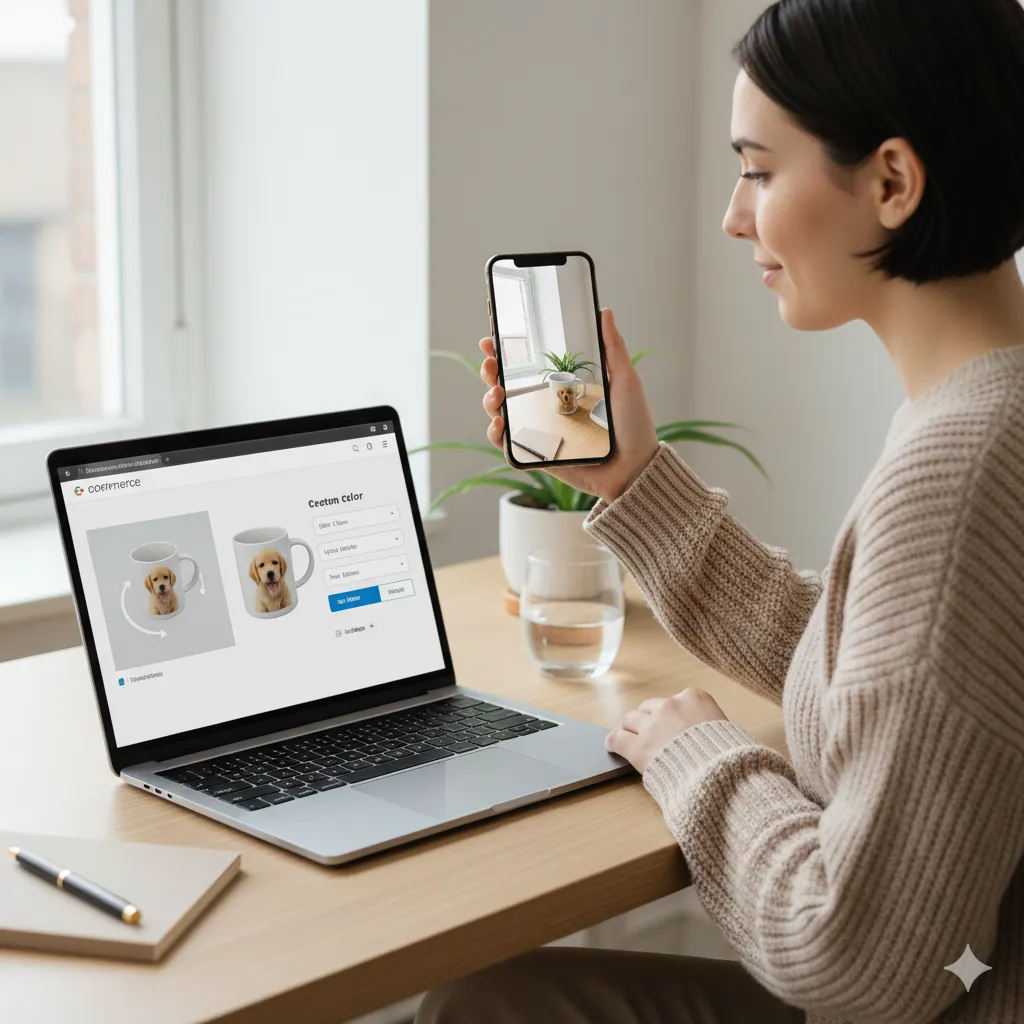
Visualization technology is addressing one of the oldest problems in e-commerce: buying something without being able to see it properly. 61% of consumers say they prefer retailers that offer AR or visualization tools to help them customize or preview products. The clearer the picture of the final product, the more confident the buyer.
The Technology That Makes It Work
Understanding what personalization requires operationally is just as important as understanding why it works.
Live product previews are the single most impactful conversion tool in personalized ecommerce. When customers can see their name, photo, or message appear on a product in real time as they customize it, uncertainty disappears. They know exactly what they are ordering. This visualization step is what separates a personalization experience that converts from one that creates confusion.
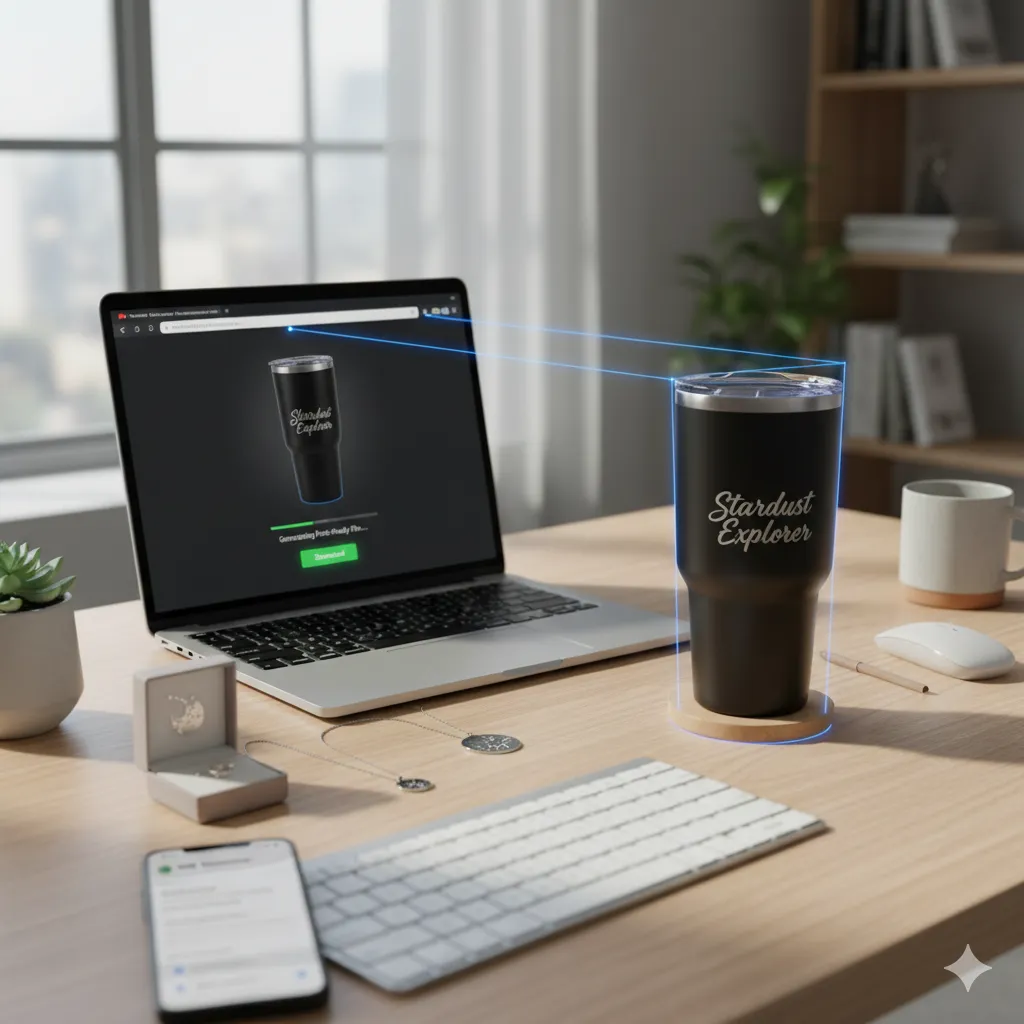
Automated production file generation is what makes personalization scalable. Every personalized order is unique, which means you cannot run a standard fulfillment workflow. Without automation, each order would require someone to manually prepare a print-ready file. That is manageable at low volume and unsustainable at scale. Modern personalization platforms generate those files automatically the moment an order is placed.
This is where Customily fits into the workflow. It handles live previews on the product page, automates the generation of print-ready production files for each order, and integrates directly with print-on-demand providers like Printify and Printful. For sellers who want to offer genuine personalization without building a manual production operation, those three capabilities working together are what make the model viable.
What the Data Means for Your Store
Stepping back from the individual statistics, a few strategic conclusions hold consistently across the research.
Personalization increases average order value because customers perceive personalized products as more valuable and are willing to pay accordingly. This gives sellers room to price with confidence rather than competing on margin.
Personalization improves conversion because interactive customization keeps shoppers engaged and removes the uncertainty that causes abandonment. The live preview is the mechanism. The confidence it creates is the outcome.
Personalization builds loyalty because customers who design something themselves feel a stronger connection to the brand that made it possible. That connection translates to repeat purchases and word-of-mouth in a way that transactional selling rarely does.
And personalization creates differentiation that is genuinely hard to replicate. A well-designed customization experience, backed by automated fulfillment, is not something a competitor can copy overnight. The value is in the system.
Final Thoughts
The statistics are consistent, and the direction is clear. Personalization has moved from a differentiator to a baseline expectation for a growing share of online shoppers. Brands that offer it are seeing measurable improvements across conversion, order value, and customer loyalty. Brands that do not are competing in a shrinking space where price is often the only lever left.
The good news for e-commerce sellers is that the technology required to offer real personalization has never been more accessible. Live previews, automated fulfillment, and print-on-demand integrations have made it possible to launch a personalized product business without the operational complexity that once made it impractical.
Want to see how personalization performs in your own store? Try Customily free and launch your first customizable product with live previews and automated production built in.
FAQs
What are product personalization statistics? They are data points measuring how customized shopping experiences affect e-commerce performance, including conversion rates, average order value, customer loyalty, and overall revenue. They help sellers understand the business case for investing in personalization.
Why is personalization important in e-commerce? It allows customers to interact with products, customize them to their preferences, and feel emotionally connected to what they buy. That engagement produces measurable improvements in conversion, order value, and repeat purchase behavior.
Do customers really want personalized products? Yes. 80% of consumers are more likely to buy from brands offering personalized experiences, and 76% actively prefer shopping with brands that offer personalization. These are majority preferences, not niche ones.
Does personalization actually increase revenue? Consistently. Companies leading in personalization generate 40% more revenue than competitors, and personalized recommendations can account for up to 31% of total ecommerce revenue.
Are customers willing to pay more for personalized products? Yes. 61% of consumers say they would pay more for a personalized experience, and 81% are willing to pay a premium for personalized apparel or footwear. Personalization shifts the value conversation away from price and toward meaning.