Table of Contents
Personalize your Shopify products
Install for freeEcommerce has never been more competitive. Thousands of stores sell similar products, often sourced from the same manufacturers and shipped through the same fulfillment providers. When the product itself is nearly identical across sellers, competing on price becomes a race to the bottom.
Product personalization offers a different path.
Instead of selling a fixed item, you invite customers to participate in creating it. They add a name, upload a photo, enter coordinates of a place that matters to them. What was a standard product becomes something they helped design, something that exists specifically for them or someone they care about. That shift changes the buying experience entirely, and it changes the economics of selling online along with it.
This guide covers how to build a personalization strategy that works, from how to structure your catalog and design the customization experience, to the technology and automation decisions that determine whether you can scale.
What Product Personalization Actually Means in Ecommerce
Product personalization in ecommerce means giving customers the ability to modify a product before they purchase it. Rather than choosing between fixed variants, shoppers actively shape the product using their own information or preferences.
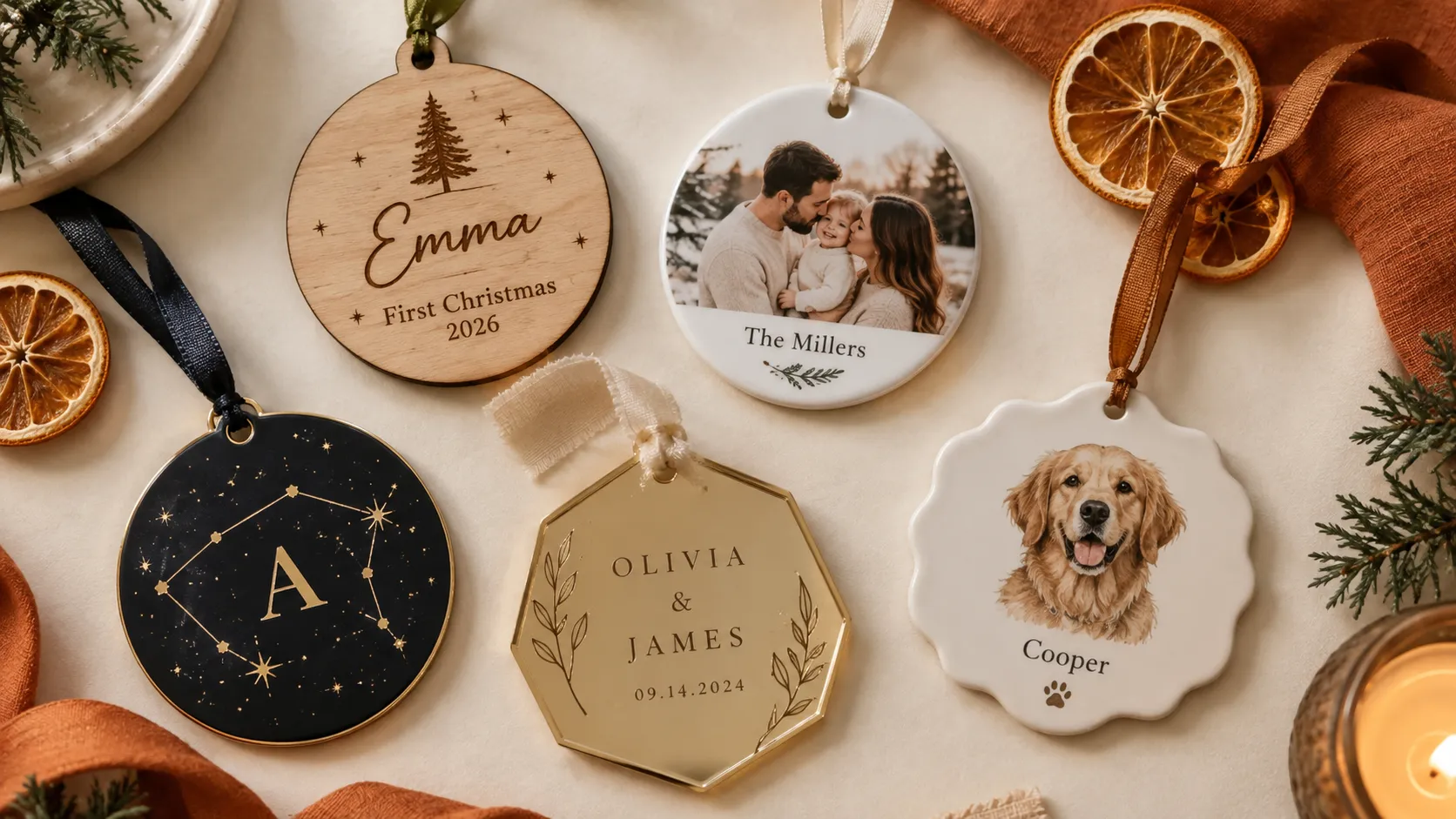
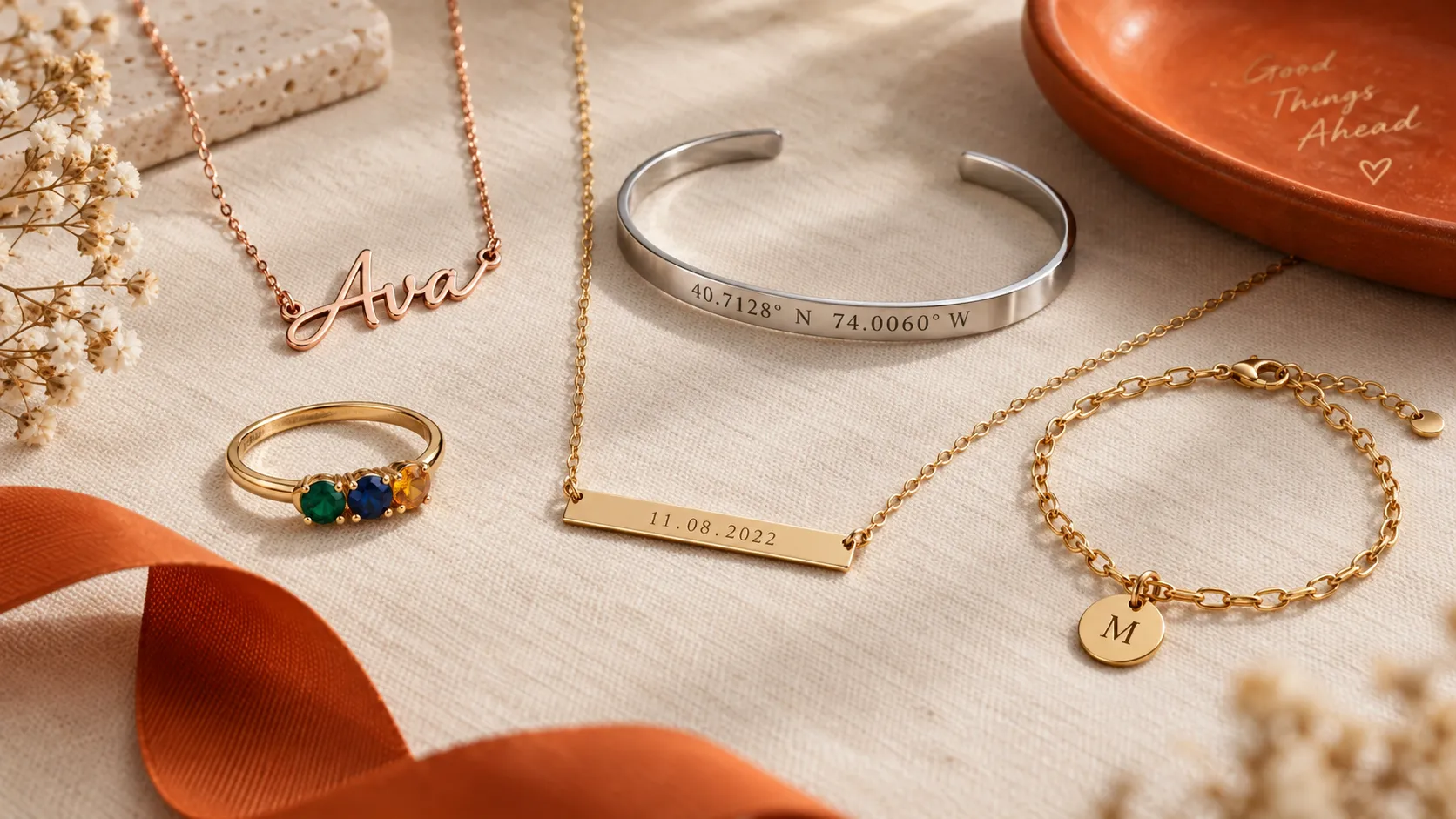
Common personalization inputs include names or initials, custom text and messages, personal photos, meaningful locations, and important dates. In practice, this might look like a customer adding a couple's names to a poster, uploading a pet photo to a portrait design, entering the coordinates of a first home, or writing a message for a birthday gift.
Each of those interactions does something important: it creates a sense of ownership before the product is even purchased. And that sense of ownership is one of the most powerful drivers of conversion in ecommerce.
From a strategic standpoint, personalization moves the model from selling products to creating experiences. The more involved a customer becomes in designing their purchase, the more committed they are to completing it.

Why Personalization Works: The Business Case
The appeal of personalization is not just emotional. It produces measurable results across several key metrics.
Conversion rates go up. When customers can see their own personalization applied to a product through a live preview, the item stops being abstract. It becomes real and theirs. That visualization reduces hesitation and increases purchase confidence in a way that static product images cannot.
Average order value increases. Personalization creates natural moments for upgrades. Customers add more names, choose a premium finish, select a larger size, or include an extra message. Each decision adds to the order total without any additional selling effort on your part.
Price sensitivity drops. Many personalized purchases are tied to meaningful moments: birthdays, anniversaries, new babies, wedding gifts. When a product carries emotional significance, the conversation shifts away from price. Customers are comparing meaning, not margins.
Direct competition becomes harder to replicate. A generic product is easy to copy. A well-designed personalization experience, with a smooth interface, strong product design, and automated fulfillment, is much harder to match. The value lives in the system, not just the item.

The Three Personalization Models
Not all personalization works the same way, and the right model depends on the type of product you are selling and the experience you want to create.
Text-based personalization is the most straightforward. The design structure stays fixed, but certain elements are dynamically replaced with customer input: a name, a date, a short message. This model works well for gift products where a personal touch adds emotional value without requiring the customer to make complex design decisions.
Configurable design personalization gives customers more control. They can choose colors, switch fonts, toggle design elements, or adjust the visual layout within a set of predefined options. Rather than just filling in a field, the customer is shaping how the product looks. This works well for products that emphasize visual identity or creative expression.
Generated design personalization is the most advanced approach. Instead of editing a template, the system creates a design dynamically based on what the customer inputs. Personalized map designs, custom family illustrations, word cloud artwork, and automatically generated photo layouts all fall into this category. Generated designs produce highly unique outputs while keeping production scalable, which makes them appealing for sellers who want to offer something genuinely distinctive.
How Personalization Changes the Buying Funnel
One of the less obvious effects of personalization is what it does to the purchase process itself.
A standard ecommerce funnel is passive. A visitor lands on a product page, reviews what they see, and decides whether to buy. There is no real interaction. The customer is evaluating, not participating.
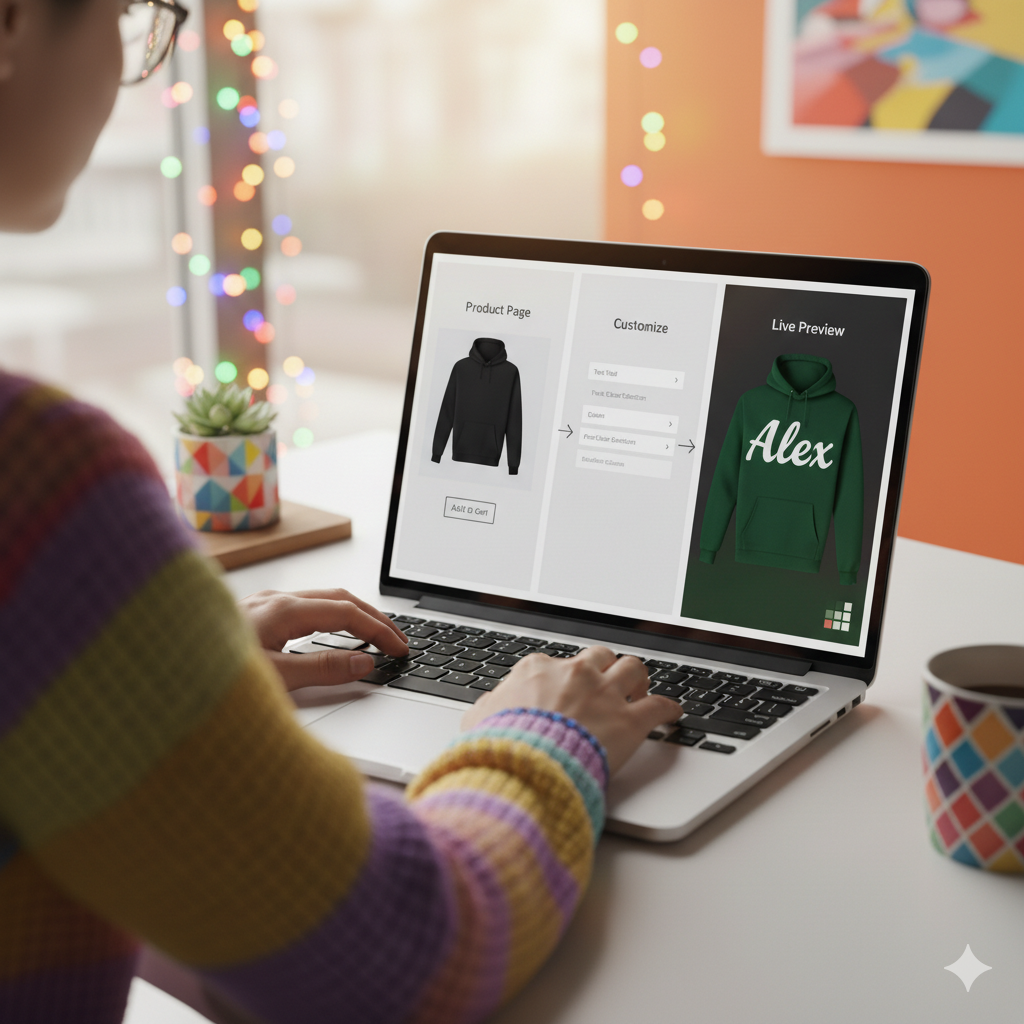
A personalized product funnel adds a step that changes everything: the customization interaction. The flow becomes traffic, product page, customization, live preview, purchase. That middle section, where the customer is entering information and watching the product take shape, builds commitment. People who have spent time customizing something are far more invested in completing the purchase than people who have simply browsed.
This engagement effect is one of the main reasons personalized product pages tend to outperform standard ones on conversion, even when the base product is similar.
How to Structure Your Personalization Catalog
Many sellers organize personalized products the same way they would a generic catalog: by product type. Mugs, posters, necklaces, blankets. That structure makes sense for standard inventory, but it often underperforms for personalization.
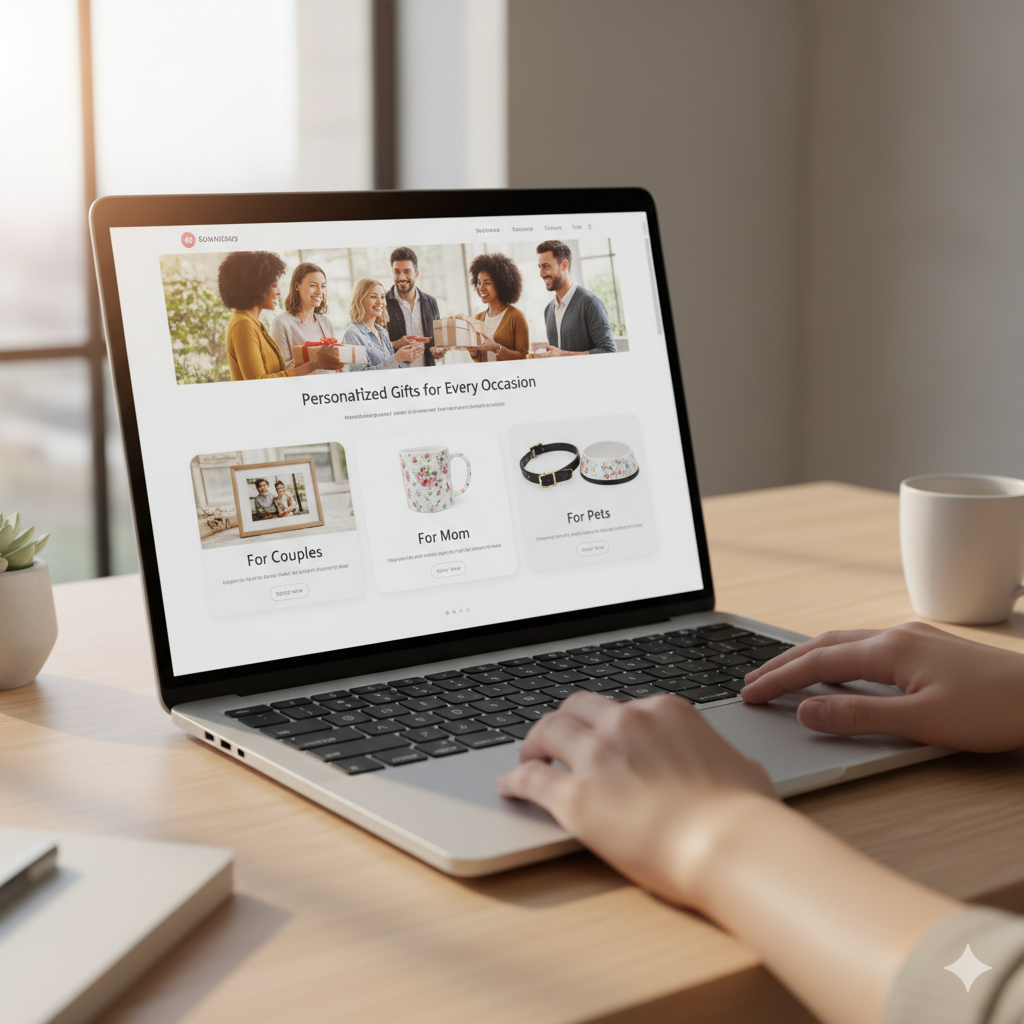
Personalized products, especially gifts, are discovered through intent. Buyers are not thinking "I need a mug." They are thinking "I need something for my mom" or "I want to get something meaningful for our anniversary." Organizing your catalog around those motivations, rather than product types, makes the browsing experience far more intuitive.
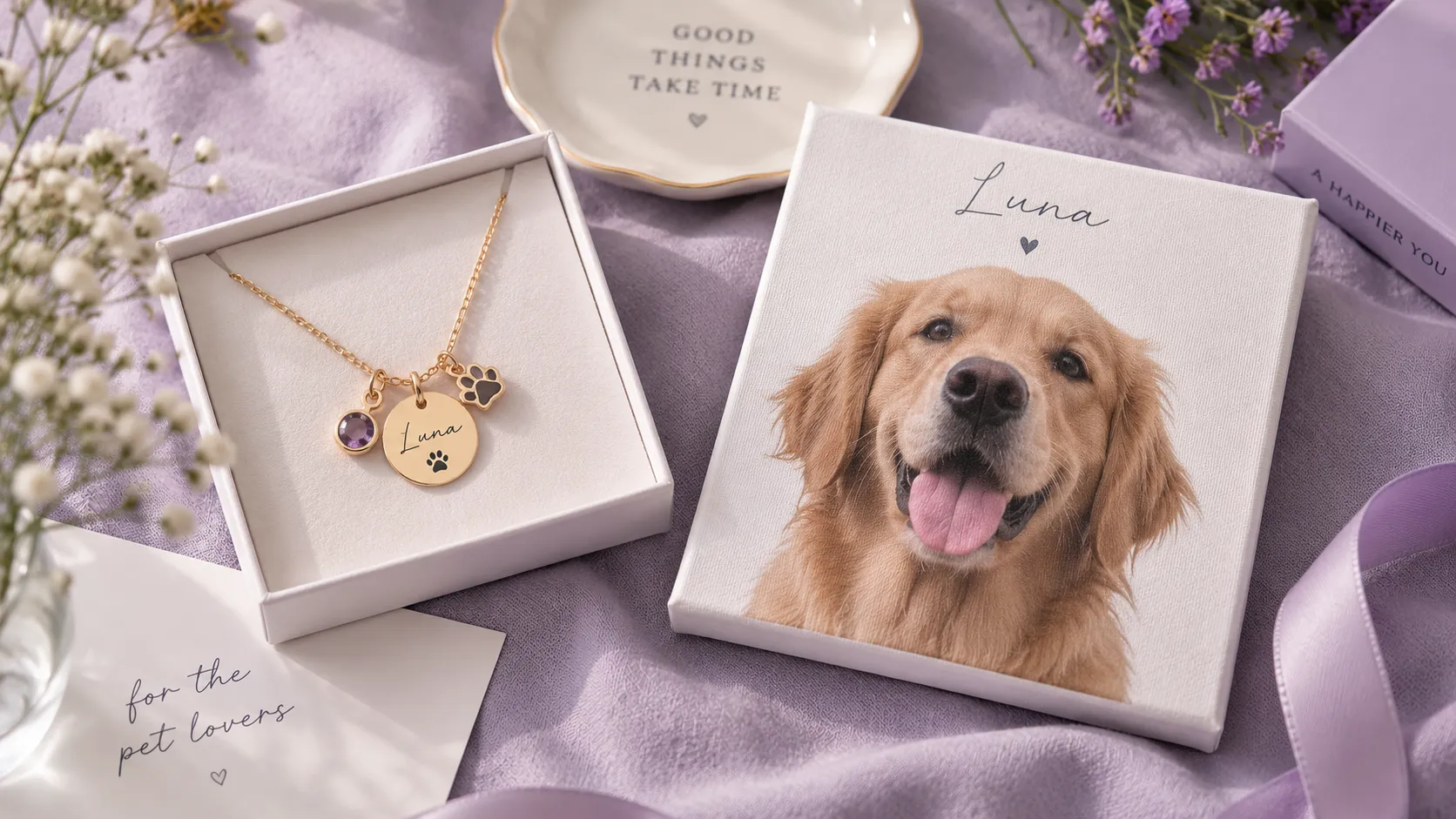
Collections built around relationships and occasions, such as for couples, for parents, for pet lovers, for teachers, for milestones, align directly with why customers are shopping. That alignment makes it easier for buyers to find what they need and easier for you to position products with relevant messaging.
Designing a Customization Experience That Converts
A strong product is not enough on its own. If the customization process is confusing, slow, or unclear, customers will leave before completing their purchase.
The personalization experiences that convert well share a few things in common.
They keep the process simple. Too many options at once overwhelms shoppers. The best customization flows guide customers through a clear sequence of steps rather than presenting every choice simultaneously.
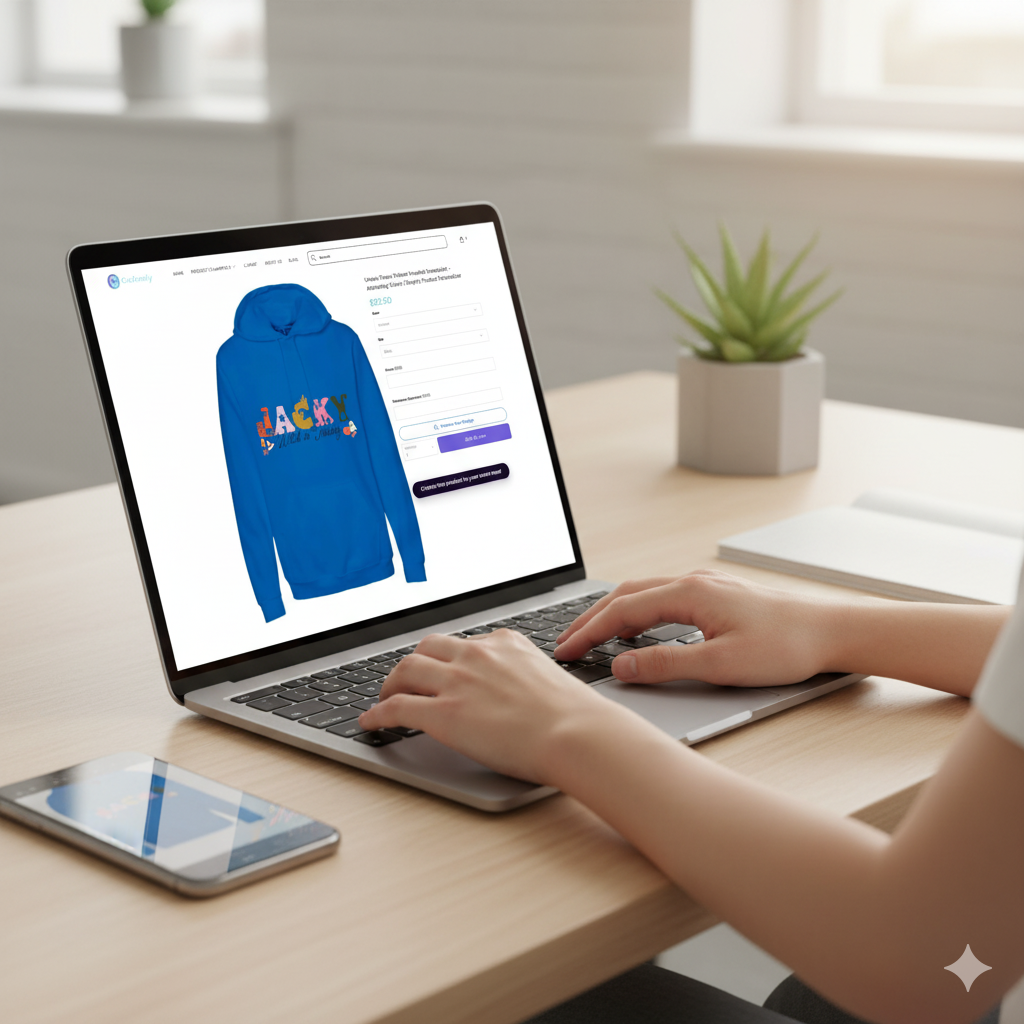
They show instant visual feedback. Live previews are one of the single most effective conversion tools in personalized ecommerce. When a customer types a name and sees it appear on the product immediately, uncertainty disappears. They know exactly what they are buying. This is where tools like Customily make a direct impact on conversion: the live preview functionality is built into the product page experience, so customers see their customization in real time before they ever reach checkout.
They are designed for mobile. A significant share of ecommerce traffic comes from mobile devices. Customization interfaces that work beautifully on desktop but become clunky on a phone lose a large portion of potential buyers. Mobile-first design is not optional here.
Automation: What Makes Personalization Scalable
The operational challenge of personalized products has always been fulfillment. Every order is different, which means you cannot run a standard pick-and-pack workflow. Without automation, each order would require someone to manually prepare a production file. At low volume that is manageable. At scale it becomes a bottleneck.
Modern personalization platforms solve this by generating print-ready production files automatically the moment an order is placed. The customer customizes, they purchase, and the correct file is sent to the supplier without any manual intervention.
Customily is built specifically for this workflow. It connects ecommerce stores with print-on-demand suppliers like Printify and Printful, handles the design automation behind the scenes, and generates the production files that each order requires. For sellers who want to grow a personalized product business without hiring a design team to process every order, this kind of automation is what makes the model sustainable.

Common Mistakes That Undermine Personalization Strategy
Personalization can fail when it is implemented poorly, and a few mistakes come up repeatedly.
Too many customization options. Offering unlimited choices sounds appealing in theory. In practice, it creates decision paralysis. Guided customization with clear, curated options tends to convert better than open-ended design systems.
No live preview. If customers cannot see how their personalization will look on the final product, many will hesitate. The uncertainty is enough to lose the sale. Live previews are not a nice-to-have; they are a conversion tool.
Manual design workflows. Stores that rely on manual file preparation for each order hit a ceiling quickly. Automation is not just about efficiency. It determines whether the business model is viable at scale.
Weak base designs. Personalization adds emotional value, but it cannot rescue a product that looks bad. The underlying design still needs to be visually strong and relevant to the audience you are selling to.
Final Thoughts
Personalization is one of the clearest ways to move out of price competition and build a stronger, more defensible ecommerce business. But understanding the strategy is only one part of the equation. Execution is where most stores fail.
Many sellers attempt to add personalization by layering basic input fields onto standard product pages. The result is often a fragmented experience, manual operational work, and limited scalability. The promise of personalization is there, but the system behind it cannot support real growth.
This is where the right infrastructure becomes critical.
Customily is built to handle the full personalization workflow end to end. From the moment a customer starts customizing a product, everything is designed to reduce friction and increase confidence. Real time previews allow shoppers to see exactly what they are buying. Structured customization flows guide them without overwhelming them. And once the order is placed, production files are generated automatically and sent directly to fulfillment providers.
That combination is what turns personalization from a feature into a scalable business model.
Instead of managing designs manually or limiting what customers can create, you can offer a wide range of personalized products while keeping operations efficient. The experience feels custom to the buyer, but the process remains automated for the seller.
The gap between stores that experiment with personalization and those that build it as a core strategy will continue to grow. The difference is not just in what they sell, but in how their entire system is designed to support it.
If you are serious about building a personalization driven store, the next step is not just adding options. It is choosing the right infrastructure to support growth from day one.
Try Customily for free and see how a fully integrated personalization workflow can transform both your customer experience and your operations.
Frequently Asked Questions
What is a product personalization strategy? It is a structured approach to allowing customers to customize products before purchasing. This includes decisions about which customization inputs to offer, how to design the user experience, and how to automate production so the model can scale.
Why do personalized products perform well in ecommerce? They create emotional value and give customers a sense of ownership before the purchase is complete. That investment in the product increases conversion rates and reduces price sensitivity.
What technology do you need to sell personalized products online? At minimum, you need a personalization platform that supports live previews, automated production file generation, and integration with fulfillment providers. These three capabilities together are what make personalized ecommerce scalable.
Does personalization actually increase conversion rates? Yes, consistently. When customers see their own customization applied to a product through a live preview, it increases purchase confidence and reduces the uncertainty that causes cart abandonment.
Can personalized products scale? Yes, but only with the right automation in place. Platforms that generate production files automatically and connect directly with print-on-demand suppliers make it possible to handle high order volumes without proportional increases in manual work.